A reason to return
The core task is faster or more useful on mobile, giving the product value after acquisition rather than relying on installation alone.
Mobile products designed for use beyond the first download
We build iOS and Android experiences together with the accounts, data, backend, administration, notifications, and support workflows that make them useful.
Service family · Digital products
Design, logic, and testing evolve together from the first critical journey to the product used every day.
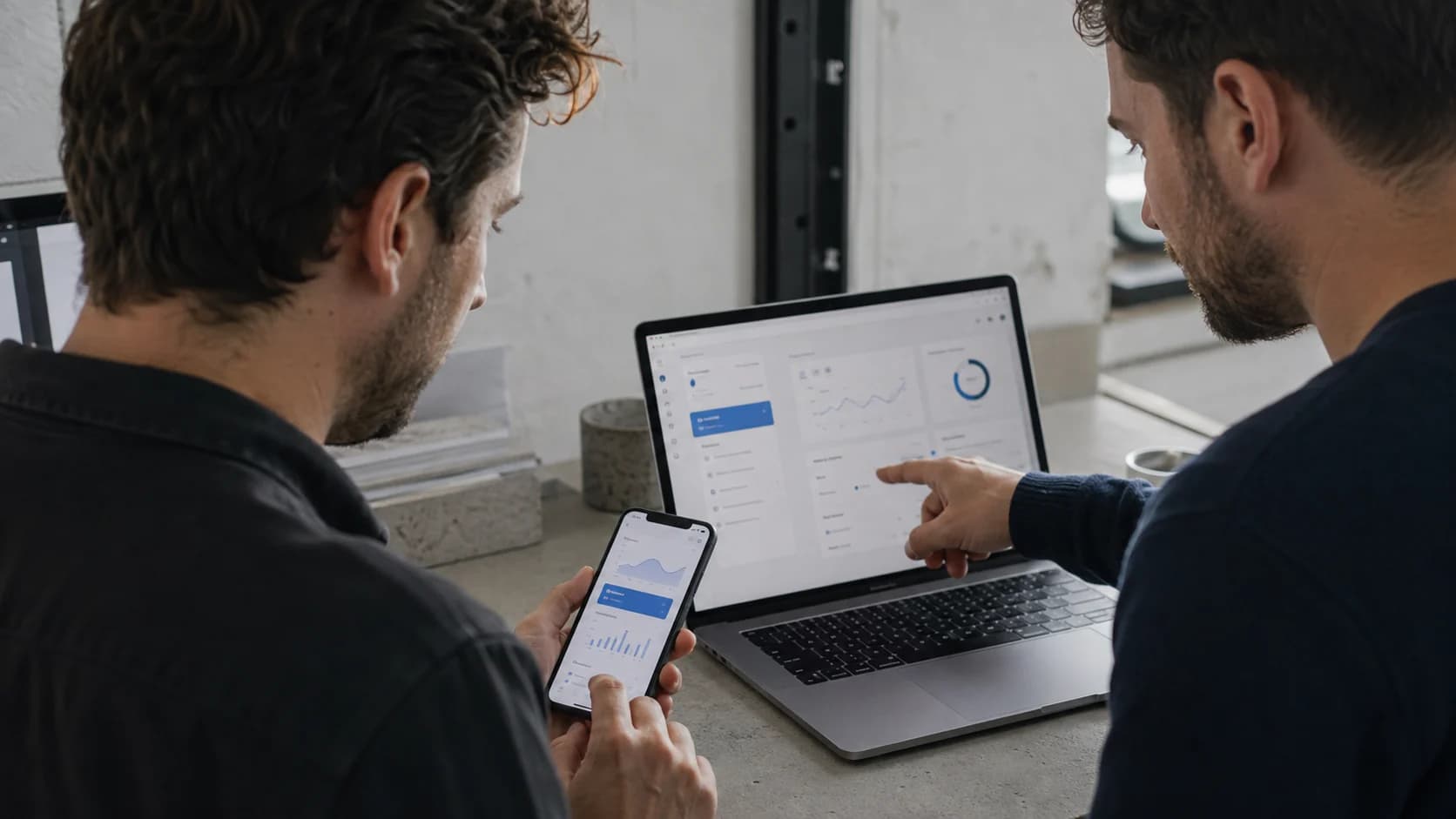
Where we start
A mobile app is justified when the context of use matters: repeated access, notifications, camera or location, offline tolerance, a device-level experience, or a focused daily workflow. If a responsive web product can solve the same need more simply, we make that option visible before recommending app-store distribution.
When mobile is the right channel, we design the complete product. That includes onboarding, authentication, permissions, backend services, administration, analytics, store preparation, support, and update strategy—not only the screens installed on a phone.
What the project must achieve
The core task is faster or more useful on mobile, giving the product value after acquisition rather than relying on installation alone.
Accounts, notifications, camera, photos, or location are requested in context, with an explanation and a usable fallback where possible.
Shared product logic stays coherent while platform conventions, safe areas, keyboards, navigation, and accessibility are respected.
Content, users, support actions, data, and notifications can be operated without treating the app as an isolated client.
Testing, store assets, review requirements, monitoring, crash evidence, and future OS updates are planned as ongoing product work.
01
We start with context: who uses the product, how often, under what connectivity, and which device capabilities genuinely remove friction. This avoids paying for two app-store releases when a web experience would perform the job better.
The first journey includes the moments around the main action—onboarding, empty states, interruption, permission denial, confirmation, and re-entry—because mobile use rarely follows a perfect uninterrupted demonstration.
02
React Native and Expo can be a strong fit when product logic is shared and the required native capabilities are supported responsibly. They can reduce duplicated delivery while preserving access to the native platforms.
A native or deliberately split implementation may be more appropriate for specialised device behaviour, performance constraints, or platform-specific teams. We decide from the product risk, not from a universal preference.
03
We connect APIs, accounts, data, notifications, content, and administration, then test on relevant physical and simulated devices. Privacy declarations and store information must match what the application actually does.
After release, crash reporting, analytics, reviews, support cases, and OS changes become product evidence. Maintenance keeps dependencies and store compatibility current while product decisions remain tied to use.
How we work
We compare mobile, responsive web, and phased alternatives against the user's context and the product's commercial goal.
We test navigation, interruption, permissions, and the highest-risk interaction before completing the application.
We develop the app together with backend services, administration, analytics, and real failure states.
We prepare store delivery, verify production, monitor quality, and plan updates using product and support evidence.
Frequently asked questions
Yes. Depending on product constraints, we can use a shared React Native and Expo codebase or recommend platform-specific work where specialised native behaviour makes it necessary.
Choose mobile when repeated device use, notifications, camera, location, offline behaviour, or app-store distribution create meaningful value. A web application is often a better first step when reach, rapid iteration, and link-based access matter more.
It can and often should. We define the APIs, data, user management, content, support actions, notifications, and operational tools required to deliver the complete service.
We can prepare builds, assets, privacy information, and submissions in developer accounts owned by the client. Apple and Google control the review decision and timing, so acceptance cannot be guaranteed by an agency.
Yes. We first inspect the codebase, dependencies, crash evidence, analytics, store state, and release process, then separate urgent stability work from product changes.
The application needs monitoring, dependency and OS updates, store compliance, support feedback, and measured product iterations. We can define this as a maintenance and development rhythm before release.
Tell us who will use the app, in what context, and what they must accomplish. We will help verify the channel and define the first useful journey.
Discuss your mobile app